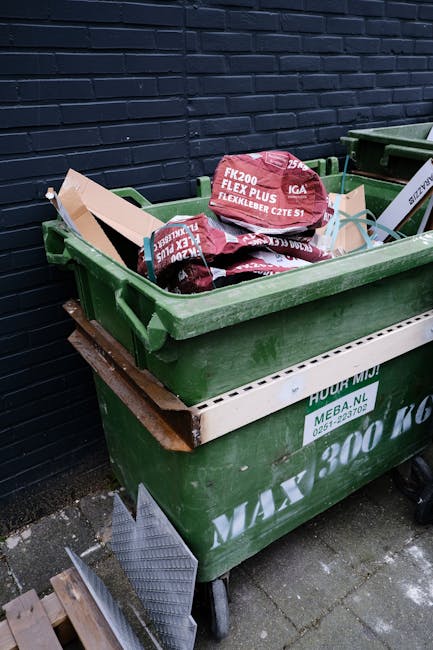
Golden Lane Estate rubbish clearance rules and contacts
If you live or manage a property at Golden Lane Estate, rubbish clearance can feel straightforward right up until it isn't. One week it's a single broken chair and a bag of old paper; the next, you're dealing with bulky furniture, lift access, bin stores, recycling rules, and the awkward question of who actually needs to be contacted. This guide on Golden Lane Estate rubbish clearance rules and contacts pulls the whole thing together in plain English, so you can clear waste properly, avoid unnecessary hassle, and know when to ask for help.
Truth be told, the rules matter just as much as the removal itself. Golden Lane Estate is a shared residential environment, so poor waste handling can cause blocked access, unwanted smells, fire risk, complaints from neighbours, and extra work for estate staff. Below, you'll find a practical breakdown of how clearance usually works, what to check before moving anything, which contacts are relevant, and how to choose the right clearance option without making a simple job into a messy one.
Table of Contents
- Why Golden Lane Estate rubbish clearance rules and contacts Matters
- How Golden Lane Estate rubbish clearance rules and contacts Works
- Key Benefits and Practical Advantages
- Who This Is For and When It Makes Sense
- Step-by-Step Guidance
- Expert Tips for Better Results
- Common Mistakes to Avoid
- Tools, Resources and Recommendations
- Law, Compliance, Standards, or Best Practice
- Options, Methods, or Comparison Table
- Case Study or Real-World Example
- Practical Checklist
- Conclusion
- Frequently Asked Questions
Why Golden Lane Estate rubbish clearance rules and contacts Matters
Golden Lane Estate is not the kind of place where waste can be left wherever is convenient. Shared walkways, bin areas, controlled access routes, and close neighbours mean every item you move needs a bit of thought. If you ignore the process, even for a small clear-out, the result can be surprisingly disruptive. A mattress propped in the wrong place, a stack of boxes in a corridor, or a bagged pile left beside a communal bin area can create a domino effect for everyone else.
That is why the rules and contacts matter. They help you understand where waste should go, what should be kept out of common areas, and who to contact when your rubbish is too bulky, too awkward, or too risky to move without planning. In an estate setting, this is not just about tidiness. It is about access, safety, hygiene, and keeping things fair for residents who are sharing the same spaces.
There is also a practical cost angle. A clearance job handled badly can mean extra trips, refused items, damage to communal areas, or fees for avoidable rehandling. To be fair, most people do not set out to cause trouble; they just need clearer guidance. A little advance checking saves a lot of back-and-forth later.
Expert summary: On Golden Lane Estate, the best rubbish clearance is the one that is planned before the first item is moved. Check the estate rules, identify the right contact, and separate ordinary waste from bulky, recyclable, or specialist items before collection day.
If you are comparing removal options for a flat, office, or larger property clear-out, it can also help to look at related services such as flat clearance, furniture clearance, and general waste removal so you can match the job to the right approach.
How Golden Lane Estate rubbish clearance rules and contacts Works
The process usually starts with the type of waste, not the collection itself. Golden Lane Estate rubbish clearance rules and contacts are easiest to understand when you split the job into categories: everyday bagged rubbish, bulky household items, construction-type waste, and anything potentially hazardous. Those groups do not always follow the same route.
For standard household waste, residents typically need to use the designated bins or estate collection arrangements. For bulky waste, furniture, or a larger declutter, you may need to arrange a separate removal. If the item affects shared access or needs special handling, a direct contact may be required first. That might sound obvious, but in real life people often skip that step because they are in a hurry and just want the sofa gone by Tuesday. Understandable. Still not ideal.
The right contact depends on the issue:
- Estate or block management contact: for access, placement, permission, or estate-specific rules.
- Waste clearance provider: for lifting, loading, and lawful removal of bulky or mixed waste.
- Specialist disposal contact: for items such as fridges, hazardous waste, or confidential material.
In practice, a good clearance plan should answer five questions before anyone starts moving things:
- What is being removed?
- Where is it located inside the building?
- Does it need permission or advance notice?
- Can it be recycled, reused, or safely broken down?
- Who is responsible for the final handover or collection?
If your clearance is more than a simple bin run, you may also want to understand linked services like house clearance, home clearance, or loft clearance, because a lot of estate jobs are really a mixture of several small jobs rather than one clean category.
Key Benefits and Practical Advantages
Following the rules is not just about being a good neighbour, although that helps. There are real practical benefits too.
- Less disruption: Clear routes, fewer blocked entrances, and less noise in shared areas.
- Better safety: Proper lifting, safer movement of items, and less risk of tripping hazards.
- Cleaner communal spaces: Nobody enjoys walking past a pile of damp cardboard that has been sitting there since Friday.
- Fewer delays: If the right people are informed early, collection is less likely to stall.
- More recycling: Good sorting often means more items can be reused or diverted from landfill.
- Lower stress: You are not chasing missing approvals or explaining yourself after the fact.
There is also a human advantage that people underestimate. When your removal is organised properly, it feels calmer. You know what is going where, who is collecting it, and whether anything needs to be left behind. That matters when you are already dealing with a move, a bereavement clear-out, a renovation, or just a badly overcrowded flat.
If you are dealing with furnishings specifically, related pages such as mattress and sofa disposal and furniture disposal can help you think through the item-by-item side of the job. Not everything needs the same treatment, and that is often where people save time.
Who This Is For and When It Makes Sense
This topic is relevant to a few different people, and not all of them are clearing out a flat in one go.
- Residents who need to dispose of bulky household waste, old furniture, or accumulated clutter.
- Landlords and managing agents dealing with end-of-tenancy rubbish, abandoned belongings, or periodic clear-outs.
- Contractors and decorators who need to remove light builders' waste without disturbing residents.
- Home movers who discover, usually at the last minute, that half the spare room is not worth taking to the new place.
- Busy households that need a one-off clearance after renovation, downsizing, or a change in circumstances.
It makes sense to use a structured rubbish clearance approach when the waste is too bulky for normal bins, when you need help lifting items down stairs, or when the items have to leave the building without causing inconvenience to neighbours. Sometimes the easiest answer is also the most sensible one: get the waste removed properly, once, rather than trying to shift it in bits and pieces over several weekends.
For business-related or mixed-use spaces, the relevant service can be different again. In those cases, office clearance or business waste removal may be more appropriate than a household-style collection.
Step-by-Step Guidance
If you want to handle Golden Lane Estate rubbish clearance without fuss, use a simple sequence. It sounds basic, but basic done well is often what works best.
- Identify the waste type. Separate ordinary household rubbish from bulky items, recyclables, e-waste, and anything hazardous.
- Check estate instructions. Confirm whether items can be left in a designated area, whether booking is required, and whether there are access windows.
- Measure or photograph larger items. This is especially useful for sofas, wardrobes, appliances, and awkward furniture that may need to be carried through tight hallways.
- Sort what can be reused or recycled. Keep cardboard, metal, textiles, and reusable furniture apart where possible.
- Arrange the right contact. Speak to estate management if the issue affects access or communal areas, and contact a clearance provider if lifting and transport are needed.
- Confirm the pickup plan. Make sure you know where items will be left, when they will be collected, and what should not be touched.
- Clear access routes. Lift clutter from doorways and stairwells before collection day. It makes a visible difference.
- Check the final sweep. Once the waste is gone, look for loose screws, broken glass, packaging, and any small bits that tend to hide under furniture.
If you have mixed waste, it may help to read about builders waste clearance and what can go in a skip so you can better separate what belongs in a specialist collection from what can be handled as ordinary rubbish. The line between "just a bit of junk" and proper disposal responsibility can be thinner than people think.
Contact guidance in plain English
When people ask for contacts, what they usually need is not a phone tree or a wall of names. They need to know who to ask, in what order. Start with the person or office responsible for the estate rules if the waste affects shared areas. Then, if the waste itself needs removal, contact a clearance provider that can handle the loading, transport, and disposal correctly. If the item is sensitive, such as paperwork or devices containing data, use a specialist route like confidential shredding rather than treating it like general waste.
Expert Tips for Better Results
Here are the habits that make a rubbish clearance job easier, cleaner, and less stressful.
- Bundle by category, not by room. It is easier to manage "cardboard," "wood," "furniture," and "electricals" than a random pile from three different cupboards.
- Keep one clear staging area. One corner, one hallway end, one designated spot. Spreading items around creates confusion fast.
- Take a quick photo before collection. Handy for confirming what should go and what should stay. A bit old-school, maybe, but it works.
- Ask about awkward access early. Narrow stairs, corners, and shared entrances need planning. No one enjoys discovering this while carrying a wardrobe.
- Separate special items in advance. Fridges, mattresses, and broken appliances are often handled differently from normal rubbish.
- Be realistic about timing. If your flat is on an upper floor or your building has lift restrictions, build in extra time. Always a good idea.
One small but useful tip: if you think an item might be reusable, keep it visible until you are sure it is going. Quite a few clear-outs are made easier simply by putting "maybe" items in a separate pile. It avoids that annoying moment where something useful disappears into the van by mistake.
For white goods, take a look at fridge and appliance removal. Appliances are often heavier, trickier, and more regulated than they first appear, especially in a block setting.
Common Mistakes to Avoid
Most clearance problems on estates are not dramatic. They are small avoidable slips that add up.
- Leaving waste in corridors or communal entrances. This is the quickest way to annoy neighbours and create an access issue.
- Assuming all rubbish is treated the same. It is not. Mixed waste, electricals, and hazardous items need different handling.
- Ignoring lift or access rules. A collection can be delayed if the route has not been checked.
- Forgetting about bulky item permissions. Some estates need notice before large items are removed from shared areas.
- Not sorting recycling first. It wastes a good opportunity to reduce disposal volume.
- Using the wrong service for the job. A general waste job is not the same as a builders' waste job, and a flat clearance is not the same as a garden clearance. Similar, yes. Same, no.
A common real-world example: someone clears out a storage cupboard, puts three bags of general waste, an old desk, and a broken freezer in the same spot, then assumes one collection will solve it. Sometimes it does. Sometimes the freezer needs separate handling, and the collection gets slowed down while everyone figures out the correct disposal route. Bit of a headache for something that could have been sorted in ten minutes.
If that sounds familiar, you are not alone. The fix is usually simple: identify the item types early and use the right disposal path from the start.
Tools, Resources and Recommendations
You do not need fancy equipment to manage a sensible clearance, but a few basic tools help.
- Marker pens and labels for sorting keep, recycle, donate, and remove piles.
- Strong bags or boxes for small items so nothing spills during movement.
- Measuring tape to check whether bulky items will fit through the route.
- Work gloves for safe handling of sharp or dusty waste.
- Phone camera for photos of large items, access points, and before/after condition.
Useful website pages for planning and trust include pricing and quotes if you want a clearer idea of how a job might be assessed, recycling and sustainability if you want to understand how items may be diverted from landfill, and insurance and safety if you want reassurance around handling and property protection.
For practical booking, book online can be a sensible next step once you know what needs removing. And if you are still comparing the company itself, the about us page is useful for getting a feel for how the service is presented and what it prioritises.
Law, Compliance, Standards, or Best Practice
Estate rubbish clearance sits inside wider UK waste rules and common-sense site practice. You do not need to be an expert in legislation to do things properly, but a few principles matter.
First, waste should be handled by a responsible operator and passed on through appropriate disposal channels. Second, hazardous materials need special care. Third, you should not leave waste in a place where it creates a safety problem or obstructs shared access. In a residential estate, those basics carry a lot of weight, even before you get into the finer details.
Best practice also means knowing what the item is before it is moved. That includes anything that could leak, break, contaminate other items, or contain personal data. Household batteries, old paint, cleaning chemicals, and broken appliances are all examples where extra caution is sensible. If in doubt, treat it as a separate category rather than mixing it into the general pile.
For items that may contain data or sensitive records, use a secure route like confidential shredding. For anything that is likely to be classed as hazardous, hazardous waste disposal is the safer and more appropriate path. That is not overkill; it is good practice.
There is also a customer-service side to compliance. A clear complaints route, transparent payment handling, and sensible service terms help reduce misunderstandings. If you are checking that side of things, pages like complaints procedure, payment and security, terms and conditions, and privacy policy are worth a look.
Options, Methods, or Comparison Table
Different clearance methods suit different estate situations. Here is a simple comparison to help you decide.
| Method | Best for | Pros | Watch out for |
|---|---|---|---|
| Bagged waste in designated bins | Small daily household rubbish | Simple, low effort, usually predictable | Not suitable for bulky items or overflow |
| Bulk item removal | Sofas, mattresses, wardrobes, appliances | Gets awkward items out in one go | May need special handling or notice |
| Flat clearance | Full or partial property clear-outs | Good for mixed household contents | Needs planning and sorting |
| Builders waste clearance | DIY or refurbishment waste | Handles rubble, timber, packaging, and trade-type waste | Not the right route for ordinary household rubbish |
| Specialist disposal | Fridges, hazardous waste, confidential items | Safer and more compliant | Requires correct category and sometimes extra notice |
So which one is best? It depends on volume, item type, access, and whether you need a quick one-off removal or a fuller tidy-up. If your job is mixed and a bit awkward, a combined approach is often the most efficient. Not glamorous, but effective.
Case Study or Real-World Example
Here is a realistic example from the kind of situation people often face on an estate like Golden Lane.
A resident downsizes from a two-bedroom flat and needs to remove a wardrobe, a set of shelves, two bags of general rubbish, an old mattress, and several boxes of books. The lift is available, but the hallway is narrow and the collection window is tight. The first instinct is to move everything into the corridor and sort it later. That is exactly where the trouble starts.
Instead, the resident splits the items into groups: keep, recycle, donate, and remove. The mattress and furniture are identified separately. The route from the flat to the lift is checked in advance. Management is informed that bulky items will be removed on a specific day. A provider is then booked for the full load rather than trying to do it piecemeal.
The result is much calmer. The hallway stays clear. The lift journey is shorter. No one is surprised. The final sweep takes minutes rather than an hour. And, perhaps most importantly, there is no awkward "who left this here?" moment with neighbours. That kind of quiet success is the real win.
If you are dealing with a similar project, pages such as garage clearance or loft clearance can also be useful if the clutter has spread into storage areas. Those spaces always hide more than you remember, somehow.
Practical Checklist
Use this checklist before you arrange collection:
- Have I identified every item that needs to go?
- Have I separated ordinary waste from bulky, recyclable, and specialist items?
- Do I know whether estate permission or notice is needed?
- Are communal areas, stairwells, and lift access kept clear?
- Have I measured awkward furniture or appliances?
- Have I set aside anything that should be reused, donated, or sold?
- Do I need specialist disposal for a fridge, mattress, hazardous item, or confidential material?
- Have I confirmed the collection time and access route?
- Do I know what happens if something cannot be taken on the day?
- Have I checked the relevant service pages for pricing, safety, and booking details?
Quick reminder: if you are removing anything that could block a shared route, please deal with it before it becomes a problem. That single habit prevents a lot of stress.
Get a free quote today and see how much you can save.
Conclusion
Golden Lane Estate rubbish clearance rules and contacts are really about keeping a shared place running smoothly. Once you know what needs removing, who to speak to, and how to separate ordinary waste from bulk or specialist items, the whole process becomes much easier. There is less guesswork, less disruption, and a better chance that the job is handled properly the first time.
If you take one thing away, let it be this: plan the clearance before you start carrying bags down the hallway. It sounds simple because it is simple. And simple, when you are dealing with stairs, lifts, neighbours, and odd-shaped furniture, is usually the best place to be.
When the job is organised well, the flat feels lighter, the building feels calmer, and you can breathe a bit easier. That's worth doing right.
Frequently Asked Questions
What are Golden Lane Estate rubbish clearance rules and contacts for?
They help residents and property managers understand how to dispose of waste properly, who to contact for permissions or access issues, and how to arrange removal of bulky or specialist items without causing disruption.
Do I need permission to leave bulky rubbish in a shared area?
Often, yes. If waste affects communal spaces, access routes, or building safety, it is sensible to check the estate instructions or speak to the relevant management contact before placing anything out.
Who should I contact first for a rubbish clearance on the estate?
Start with the estate or block management contact if the waste affects shared areas. If the issue is purely removal, then contact a suitable clearance provider. For special items, use a specialist disposal route.
Can I put a sofa or mattress out with normal bins?
No, bulky items usually need separate handling. Sofas and mattresses are best dealt with through a proper bulky waste or furniture disposal route, not by leaving them near the bins.
What should I do with broken appliances or fridges?
Appliances should be handled separately, especially fridges and freezers. They are heavier, harder to move, and may need specialist removal. A dedicated appliance service is the safer option.
What happens if I leave rubbish in a corridor by mistake?
It can create an access problem, a safety risk, and a nuisance for neighbours. If that happens, remove it as soon as possible and check the estate rules so it does not happen again.
Is recycling important for estate rubbish clearance?
Yes. Sorting recyclable materials like cardboard, metal, and reusable furniture can reduce disposal volume and help the job run more efficiently. It also makes the whole process tidier.
How do I know whether I need flat clearance or general waste removal?
If you are clearing an entire room, flat, or a large mix of household items, flat clearance is usually more suitable. If it is mainly mixed rubbish or a smaller load, general waste removal may be enough.
Can confidential paperwork go out with normal rubbish?
No, it should not. Sensitive documents are better handled through confidential shredding so personal or business information is not exposed.
What if I am not sure whether an item is hazardous?
When in doubt, treat it as a separate item and do not mix it with ordinary waste. Hazardous materials need extra care, so it is better to pause and check than to guess.
How far in advance should I plan my clearance?
As early as possible, especially if you need permission, access coordination, or bulky item removal. Even a simple clearance goes more smoothly when you are not rushing on the day.
Where can I check pricing, safety, and service details?
Useful starting points include the pricing and quotes page, the insurance and safety page, and the terms and conditions page. Those pages help you understand what to expect before you book.