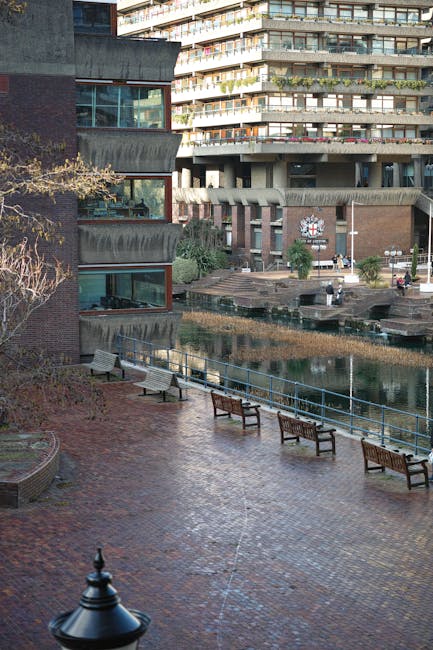
Barbican Centre rubbish removal options near the venue: a practical guide for visitors, businesses, and nearby residents
If you are dealing with waste close to the Barbican Centre, you probably want one thing above all: a clean, simple solution that does not turn into a logistical headache. Barbican Centre rubbish removal options near the venue can mean anything from clearing a few bulky items after an event to dealing with office waste, furniture, or mixed rubbish from a flat, shop, or workspace nearby. The challenge is that central London has tight access, busy streets, limited loading space, and very little patience for guesswork.
This guide walks through the realistic options, how the process usually works, what to look out for, and how to choose the right type of clearance without overpaying or creating more mess than you started with. Truth be told, rubbish removal around the Barbican is rarely about brute force. It is about timing, access, compliance, and choosing a service that understands the area.
Why Barbican Centre rubbish removal options near the venue Matters
The Barbican is not a typical neighbourhood job. It sits in a dense part of London where foot traffic, deliveries, and time windows all compete with each other. If you are trying to remove rubbish near the venue, the exact method you choose matters because one bad decision can waste hours. A skip left without proper planning, for example, may be awkward or impractical in a tight street. A van that arrives at the wrong time can mean delays. Even a simple furniture collection can become fiddly if access is restricted or the lift is busy.
For visitors, organisers, tenants, and nearby office teams, the goal is usually speed and discretion. Nobody wants piles of broken chairs sitting around after a show, or cardboard boxes clogging a shared hallway at the end of a long day. Nearby residents have a different concern: they need waste cleared without noise, disruption, or a lingering sense that the place is in disarray. Let's face it, rubbish is never glamorous. But the way it is removed says a lot about how smoothly everything else will go.
There is also a practical reputation issue. In central London, a tidy loading plan and a sensible clearance approach reduce the risk of complaints from neighbours, building managers, or other occupants. That sounds minor until you are the one trying to sort it out at 8:30 on a wet weekday morning. Then it suddenly matters quite a lot.
If you are managing a larger clear-out, it can help to think beyond "take it away" and look at the right service for the type of waste involved. For example, mixed household waste, office debris, broken furniture, and builder-style waste all benefit from different handling. If your project involves an entire property or a cluttered flat nearby, a structured service such as flat clearance or house clearance may be more useful than a basic one-off collection.
How Barbican Centre rubbish removal options near the venue Works
In plain English, rubbish removal near the Barbican usually follows a simple pattern: assess the waste, decide how it will be loaded, arrange a suitable time, and remove everything in one or more visits. The details are where things either go well or wobble a bit.
Most jobs start with an estimate of volume and waste type. That might be a single bulky item, several bags of rubbish, an office clear-out, or a mix of furniture and general waste after an event or renovation. From there, the provider decides what vehicle, crew size, and access plan are needed. For awkward central London streets, that access plan can be the difference between a smooth 30-minute job and an irritating half-day.
Some people assume all rubbish removal is the same. It really is not. A sofa in a basement flat is a different job from stacked packaging in a commercial unit. Likewise, electronic waste, fridge units, and potentially hazardous materials need extra care. If you have appliances to dispose of, a specialist route such as fridge and appliance removal may be the safer choice. If the waste includes office paperwork or confidential material, confidential shredding can help protect sensitive information.
In many cases, the service can be tailored to the load. That means you do not always need a full vehicle or a major clearance. Sometimes you just need the right team at the right time, with the right handling plan. Quite ordinary, really. But very useful.
If you want to understand general disposal and collection options in more detail, the broader waste removal service and the pricing guidance on pricing and quotes are good places to start before you book anything.
Key Benefits and Practical Advantages
The main benefit of using a local or area-aware rubbish removal service near the Barbican is that it removes friction. Instead of trying to organise multiple trips to a tip, lift heavy items yourself, or leave rubbish waiting around, you get a cleaner and faster result.
- Less disruption: A planned collection is usually quicker than improvising your own disposal route.
- Better access handling: Tight streets, loading restrictions, and shared entrances are easier to manage with experience.
- Safer lifting: Heavy furniture, appliances, and mixed waste can be moved without putting strain on residents or staff.
- Cleaner end result: Removal teams usually clear the area properly, not just the obvious pile in the middle.
- More suitable disposal: Reusable and recyclable items can be separated more intelligently where possible.
There is another advantage that is easy to overlook: peace of mind. A lot of rubbish problems grow because people delay them. The boxes start in one corner, then spread into a corridor, then the bins fill up, then everyone gets slightly grumpy about it. By the time someone finally acts, the job feels bigger than it actually is. A proper clearance cuts through that slow creep.
For example, a small office near the venue might only need a few desks, chairs, and a shredded stack of old filing cabinets removed. But if that same office also has appliance waste, packaging, and a few awkward items stored in a back room, the simplest solution may be a combined clearance rather than several separate arrangements. A service such as office clearance can be more efficient in that kind of situation.
And if the job is mostly old sofas, wardrobes, or tables, you may get a more targeted result from furniture clearance or mattress and sofa disposal.
Who This Is For and When It Makes Sense
Barbican Centre rubbish removal options near the venue are relevant to a surprisingly wide range of people. It is not just for major clear-outs. In fact, the smaller, everyday jobs often need the most practical help.
Event organisers: If you have staging waste, packaging, broken fittings, or leftover materials after an event, timing becomes everything. You want the venue or nearby area reset quickly and quietly.
Local businesses: Offices, studios, retailers, and hospitality spaces often build up waste faster than expected. One storage cupboard becomes three. A service like business waste removal can be a straightforward option when you need commercial waste handled properly.
Residents and landlords: Flats near the Barbican often generate bulky waste during moves, refurbishments, or tenant changeovers. That is where home clearance or house clearance can be sensible, especially if the property has more than a few items to shift.
Contractors and renovators: If the job involves rubble, packaging, timber offcuts, or renovation debris, you may need a dedicated approach. builders waste clearance is often the better fit than general rubbish removal.
People clearing storage spaces: Lofts, garages, and overfilled cupboards have a way of becoming miniature museums of old things. If that sounds familiar, loft clearance or garage clearance may be exactly what is needed.
When does it make sense to act? Usually as soon as the waste starts to affect movement, safety, or stress levels. If you have to step around items, squeeze through a corridor, or keep explaining the mess to other people, that is a good sign it is time. Simple as that.
Step-by-Step Guidance
Here is the most practical way to approach rubbish removal near the Barbican without making the process harder than it needs to be.
- Identify the waste clearly. Separate general waste, furniture, appliances, documents, and any hazardous or unusual items. The more clearly you describe it, the smoother the quote and collection will be.
- Check access. Think about parking, loading, lift access, stairs, and any time restrictions. In central London, access can be the hidden complication.
- Estimate the volume. You do not need to be perfect. A rough sense of how many items, bags, or cubic metres will help enormously.
- Choose the right service type. General waste removal, furniture disposal, appliance removal, and clearance services all suit different loads.
- Book a time that fits the site. If the area is busy in the morning, an afternoon slot may be calmer. If your building has reception or concierge rules, make sure they are aware.
- Prepare the items. Where safe, put waste in one place and keep access routes clear. That saves time on the day.
- Confirm what happens next. Ask how the waste will be handled, whether anything needs separating, and what paperwork or payment process applies.
A small but useful habit: take a quick phone photo of the waste before collection. It can make quoting much easier, and it avoids the awkward "actually, there was more than I thought" conversation. Happens all the time.
If you are not sure whether the load is mostly furniture, mixed waste, or something else, the service pages for furniture disposal and waste removal can help you think through the right category before you move ahead.
Expert Tips for Better Results
After enough clearances, a few patterns become obvious. The best jobs are rarely the ones with the fewest items. They are the ones where the customer has thought through the details early.
Tip 1: separate special items before the crew arrives. If you have a fridge, mattress, confidential paper, or anything you would not want mixed in with general waste, keep it apart. That reduces confusion and can speed up handling.
Tip 2: don't underestimate building rules. Some buildings are relaxed; others are particular. A polite check with reception, building management, or neighbours can prevent a lot of hassle. A five-minute conversation can save a half-hour delay. Honestly, that is often the difference.
Tip 3: choose the service that matches the job, not the label you first thought of. A "rubbish removal" request may actually be a sofa disposal, a flat clearance, or an office clearance in disguise. Getting the wording right usually improves the result.
Tip 4: ask about recycling where appropriate. Good operators try to separate recyclable or reusable materials where practical. If sustainability matters to you, look at the provider's recycling and sustainability approach.
Tip 5: keep the route clear. A clear path to the waste can save a surprising amount of time. It sounds obvious, but people often forget to move the box of old cables or the laundry basket sitting in the way. Then everyone shuffles around it and sighs a bit.
Tip 6: think about volume in stages. If you are clearing a cluttered space, start with the obvious bulk first. Once large items are gone, the rest often looks more manageable. That psychological shift is real, and helpful.
Common Mistakes to Avoid
The most common mistake is assuming all waste can be handled the same way. It cannot. Some loads need special handling, some need more space, and some are just awkward enough to cause avoidable delays.
- Leaving access planning too late: In central London, this is a classic problem. If the vehicle cannot stop where expected, everything slows down.
- Mixing specialist items with general waste: Appliances, confidential papers, and potentially hazardous items should be identified early.
- Booking the wrong type of service: A furniture-heavy job may not suit a general waste approach, and builder debris should not be treated like ordinary household rubbish.
- Underestimating the amount of waste: "Just a few items" sometimes turns into several bulky loads. It happens. More often than people admit.
- Ignoring building or neighbourhood constraints: Noise, loading, and timing can all matter more in the Barbican area than in a less busy part of London.
Another mistake is waiting until the problem becomes urgent. That creates rushed choices, and rushed choices are usually the expensive ones. If you can plan even a little, do it. Future-you will be grateful, even if present-you is slightly annoyed about sorting it now.
Tools, Resources and Recommendations
You do not need a complicated toolkit to organise rubbish removal well. A few simple things are usually enough.
- Phone photos: Useful for quoting and for identifying awkward items before collection.
- Basic labels or notes: Mark which items are staying, which are going, and what needs special handling.
- Measuring tape: Helpful if you need to estimate bulky furniture or check whether items will fit through doors and lifts.
- Simple inventory list: Especially useful for office clearances or larger flat clearances.
If you are weighing different removal methods, it may help to compare them against a clear service page rather than trying to decode vague promises. For instance, book online can be useful once you know what kind of job you have, while pricing and quotes is a sensible stop when you want to understand the likely structure of the job before committing.
For customers who want to understand the company background and approach, about us, insurance and safety, and health and safety policy are the most relevant pages to review. They help set expectations, which is always a good thing.
Law, Compliance, Standards, or Best Practice
Waste removal in the UK is not just a matter of lifting things and driving away. Even for straightforward jobs, there are expectations around lawful disposal, safe handling, and responsible transfer of waste. You do not need to become a compliance expert, but you should expect a professional service to act carefully and sensibly.
In practice, that means a few things. Waste should be handled in line with normal UK waste management duties. Mixed loads should be assessed properly. Items that may be hazardous or sensitive should not be thrown into the wrong stream. And where relevant, records, receipts, or job information should be clear enough to show what was collected.
Best practice also includes honest quoting. A clear description of the load, access, and any unusual items helps avoid surprises. No one enjoys a quote that changes halfway through because "we didn't realise" something was there. Better to be upfront at the start.
For customers, the simplest rule is this: use a provider that is transparent about what it can take, what it cannot take, and how it handles waste responsibly. If you are unsure about whether an item can be included, pages such as hazardous waste disposal and what can go in a skip are helpful reference points for thinking about categories of waste, even if your final solution is not a skip.
That level of clarity matters. It keeps you on the right side of common sense, and in waste work, common sense is doing a lot of the heavy lifting.
Options, Methods, or Comparison Table
Different jobs near the Barbican call for different removal methods. Here is a simple comparison to help narrow it down.
| Option | Best for | Strengths | Watch-outs |
|---|---|---|---|
| General waste removal | Mixed bags, everyday rubbish, clutter | Flexible and straightforward | Not ideal for special items or large furniture-heavy loads |
| Flat clearance | Full or partial apartment clear-outs | Good for larger domestic jobs | Needs good access planning |
| Furniture clearance | Sofas, tables, chairs, wardrobes | Efficient for bulky items | Check whether items need dismantling |
| Office clearance | Desks, office chairs, files, equipment | Well suited to business move-outs | Confidential material and electronics may need separate handling |
| Builders waste clearance | Renovation debris, packaging, offcuts | Better for heavier mixed construction waste | Some materials may need specific disposal routes |
If you only have a few items, general waste removal may be enough. If you are looking at a room full of furniture, a flat clearance approach often saves time. If you are unsure, start with the item type and volume, not with the service name. That usually gives you a cleaner answer.
Case Study or Real-World Example
Here is a realistic example. A small creative studio just off the Barbican area needed to clear out old office furniture after a layout change. The job looked simple at first: a couple of desks, several chairs, shelving, and a few bags of packaging. Then they noticed the back room also contained a broken fridge, a stack of confidential printouts, and a few awkward items stored behind the door.
Instead of arranging separate collections for each problem, they grouped the waste properly. Furniture went into the furniture stream, the fridge was separated for appliance handling, and the paperwork was treated as confidential. That made the collection smoother and reduced the risk of items being handled badly.
The most useful part was not the lifting. It was the planning. Once the team walked through the space and matched each item to the right removal approach, the rest of the process became much easier. A little boring, perhaps. But boring is good when you are trying to clear a room without drama.
The same idea applies to residents. If you are clearing a flat after a move or tidying a storage space, separating items before the crew arrives makes everything feel lighter. And yes, the room really does look better once the bulky items are gone. Amazing how that works.
Practical Checklist
Use this checklist before booking Barbican Centre rubbish removal options near the venue.
- Identify the main waste type: general rubbish, furniture, appliances, office waste, or builder debris.
- Check whether any items need special handling, such as confidential documents or potentially hazardous materials.
- Estimate the amount of waste as best you can.
- Note access details, including stairs, lifts, parking, and loading restrictions.
- Clear a path to the waste so removal is quick and safe.
- Separate reusable or recyclable items if practical.
- Confirm timing, entry arrangements, and any building rules.
- Review the service pages most relevant to your load, such as flat clearance, office clearance, or furniture disposal.
- Check the provider's safety and policy information if you want extra reassurance.
- Book only when you are comfortable that the service matches the job.
A quick final check before the day often prevents the little surprises that eat time later. Tiny thing, big payoff.
Get a free quote today and see how much you can save.
Conclusion
Barbican Centre rubbish removal options near the venue work best when you match the service to the reality of the job. That means thinking about access, item type, timing, and how much waste you actually have, not how much you hope it is. Once those basics are clear, the process becomes much simpler and far less stressful.
Whether you are clearing a flat, handling office waste, shifting furniture, or tidying after an event, the best result usually comes from calm planning and a service that knows central London conditions. That is the real difference. Not flashy promises. Just a tidy, well-run removal that leaves the space ready for whatever comes next.
And if all you needed was someone to make the whole thing feel manageable again, well, that is exactly the point. One step at a time, and the clutter does not stand much of a chance.
Frequently Asked Questions
What are the best Barbican Centre rubbish removal options near the venue for bulky items?
For bulky items like sofas, wardrobes, desks, and broken shelving, furniture clearance or a broader flat clearance approach is often the most practical. The best option depends on access, volume, and whether the items are mixed with other waste.
Can rubbish removal near the Barbican handle office waste?
Yes. Office waste removal is a common need in central London, especially for workspace moves, refurbishments, or storage clear-outs. If the job includes desks, chairs, files, or mixed office clutter, office clearance is usually the closest fit.
Do I need a skip, or is waste removal better?
That depends on the space and the waste. A skip can work in some settings, but near busy central London streets it is not always the easiest solution. Waste removal is often better when access is tight or the load needs to be taken away quickly without leaving anything on-site.
How do I know which service to choose?
Start with the waste type. Furniture, appliances, office items, builder debris, and general rubbish all point to slightly different services. If you are unsure, describe the load clearly and ask for the most suitable clearance type rather than assuming one category fits all.
Can appliance waste be collected near the venue?
Yes, but it should be handled properly. Fridges, freezers, and other appliances are usually best dealt with through a dedicated appliance removal service rather than mixed in with ordinary rubbish.
What if I only have a few bags of rubbish?
Small loads can still be worth collecting if you want a quick, hassle-free solution. The value is often in saving time and avoiding multiple trips, not just in the quantity of waste.
Is it suitable for flats with tricky access?
Yes, as long as the access details are shared in advance. In fact, flat clearances near the Barbican often benefit from proper planning because stairwells, lifts, and narrow entrances can be the biggest complication.
What should I do with confidential papers?
Keep them separate and arrange for secure handling. Confidential shredding is the sensible choice if you are clearing documents that should not be mixed with normal waste.
Can the service help with mixed rubbish and furniture?
Often, yes. Mixed loads are common. The key is to describe them accurately so the right vehicle, crew size, and disposal approach can be planned.
How far in advance should I book rubbish removal near the Barbican?
The sooner the better, especially if timing matters or the area is busy. If the job is simple, you may not need much lead time. If access is tight or the waste is large, a bit of notice helps everything run more smoothly.
What if some items might be hazardous?
Do not mix them into the main pile. Hazardous or unusual waste should be identified early so it can be handled safely and in line with the right disposal approach.
Are recycling and sustainability important for rubbish removal?
They should be. A sensible provider will separate recyclable materials where practical and aim for responsible disposal. It is not about perfection; it is about doing things properly and reducing avoidable waste.
Where can I read more about the company before booking?
Useful starting points are the about us page, the insurance and safety page, and the recycling and sustainability page. They help you understand the service approach and what to expect.